Plate 01
The subject doubles overnight
In Class 10, Biology was one third of a Science paper. In Class 11 it becomes a full subject — five units, hundreds of terms — and it arrives in the same week as Physics and Chemistry.
Seventeen years of CBSE Biology teaching, built on one rule: nothing gets memorised until the reason behind it is obvious. Taught online, for CBSE Board students across India and other countries, in Hindi and English.
Learn Biology the right way Understand Remember Excel
In Class 10, Biology was one third of a Science paper. In Class 11 it becomes a full subject — five units, hundreds of terms — and it arrives in the same week as Physics and Chemistry.
There is no time to understand, so definitions get learnt line by line. It holds for a week. It does not hold in a board paper that asks why, or in an application-based question that has never appeared in that exact form before.
Bright students walk away from medicine, biotechnology and research — not because they could not have done it, but because somewhere in Class 11 they quietly decided they were not smart enough.
Class 11 and 12 are already high-pressure years. No student should have to learn Biology through fear.
— Mini Gupta, M.Sc. (Zoology), B.Ed.
Founder, Corebio · 17 years teaching Biology
The focus is absolute conceptual clarity through daily-life examples — and then learning to analyse and solve application-based questions logically. Not the other way round.
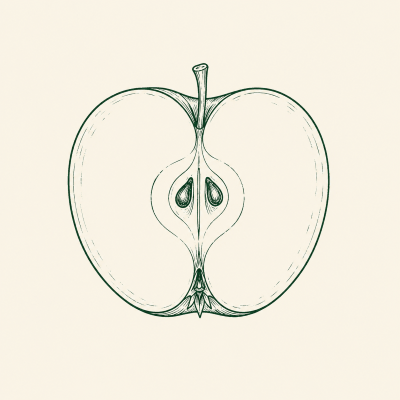
A cut apple turns brown on the plate.
Enzyme action — polyphenol oxidase
Class 11 · Biomolecules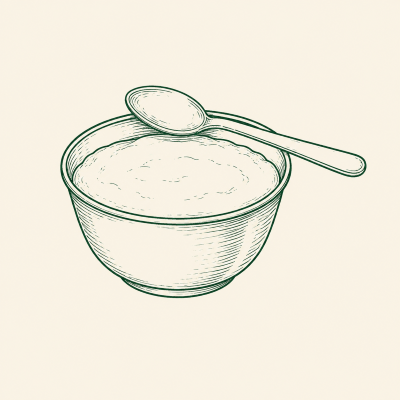
Curd sets in four hours in June, and takes all night in January.
Temperature and microbial fermentation
Class 12 · Microbes in Human Welfare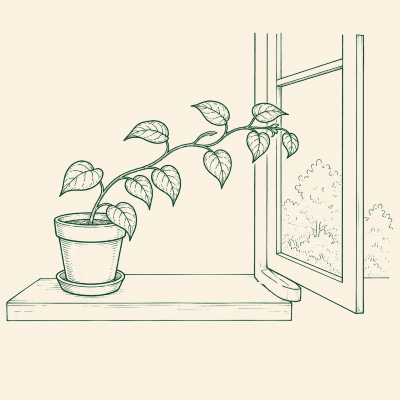
The plant on the windowsill leans towards the window.
Phototropism — auxin redistribution
Class 11 · Plant Growth & DevelopmentTwo parents, and a child with a blood group neither of them has.
Multiple alleles and co-dominance in ABO
Class 12 · Principles of Inheritance
You shiver in December without deciding to.
Involuntary neural control and thermoregulation
Class 11 · Neural Control & Coordination
The doctor insists you finish the full course of antibiotics.
Selection pressure and antibiotic resistance
Class 12 · Human Health & DiseaseSix examples from the actual CBSE syllabus. There is one of these at the start of every chapter.
Three steps, run on every single chapter — from Cell Structure in Class 11 to Ecology at the end of Class 12.
Before a single definition, the concept is anchored to something from the student's own life. Curiosity first. The textbook language comes second, and by then it already has something to attach to.
Why does a plant kept in a dark corner of the house go pale and thin, while the same plant on the balcony stays deep green?
Light as the limiting factor · chlorophyll · the light reaction
Class 11 · Photosynthesis in Higher PlantsThe core mechanism is built first and checked before anything is layered on top of it. If a student cannot say why, we do not move on — no matter what the syllabus calendar says.
Memorised
"Transcription is the process of formation of RNA from DNA." Correct — and useless the moment the question changes.
Understood
The cell needs a working copy it can send out and afford to lose. So it copies one strand, not both. Now the student can answer a question they have never seen before.
Understanding a chapter and scoring in it are two different skills, and the second one is taught too. Application questions, board-pattern practice, and answers written the way an examiner reads them.
Genetics, Molecular Inheritance and Evolution carry the highest marks in the Class 12 board paper. Photosynthesis & Respiration, Human Physiology and Meiosis carry the highest marks in Class 11. Each of these six gets extra time, by design.
Heavy, technical, and full of crosses that all look alike.
Rules first, crosses second. Once the rule behind the ratio is clear, a dihybrid cross stops being a puzzle and becomes arithmetic.
Hard because you cannot see any of it.
Taught as one continuous process you can draw from memory — replication, transcription, translation — one arrow at a time, with the reason for each step said out loud before the diagram goes on the board.
Full of theories and evidence that all sound alike on a first read.
Taught as one continuous argument — the evidence first, then the mechanism it points to — so natural selection, Hardy-Weinberg and the fossil record stop being separate things to memorise and become one line of reasoning.
The heaviest technical chapters of Class 11.
Taught as an energy budget. Once you are tracking where the energy comes from and where it goes, the cycles stop being names to remember.
Six or seven organ systems, each with its own vocabulary, arriving in the same term.
One system finished completely before the next begins — digestion done before breathing starts — so the diagrams never blur together by the time the board exam asks about several of them at once.
Every stage looks like the one before it.
Stages built one at a time with what actually changes in each, so Prophase I stops being a list of five words to cram.
Diversity in the Living World, Structural Organisation, Cell Structure and Function, Plant Physiology, Human Physiology. Everything Class 12 stands on is built here.
Class 11 detailsReproduction, Genetics and Evolution, Biology in Human Welfare, Biotechnology, Ecology — plus pre-board and board mock papers from the second term.
Class 12 detailsFor students who are strong in Physics and Chemistry but lose marks in the Biology third of the Science paper — and for those planning to take Biology in Class 11.
Class 10 detailsThey are serious institutes and they do one job extremely well: entrance preparation at scale. That is a different job from this one, and the honest difference is worth stating.
Big batches, a fixed national schedule, and a syllabus aimed primarily at NEET. If your child is already scoring well, self-driven, and preparing for an entrance exam, that model works and is often the right choice.
A group small enough that a confused face gets noticed in the moment, and teaching aimed at the CBSE board paper your child actually sits. If Biology is the subject going wrong — not the subject being optimised — this is the one built for that.
A Class 12 student who was frightened of the subject scored 20 out of 70 in the pre-board theory paper. In the board exam, she scored 50 — a 30-mark change in a single term, on the same syllabus.
One student scored 99 out of 100 in Biology and went on to secure a seat at a medical college. Every class was online. If you are wondering whether online teaching can work, this is the answer.
Seventeen years of teaching Biology — most of them as a PGT in school classrooms, in front of thousands of students. The pattern was always the same: the child who "could not do Biology" could almost always do Biology. What they could not do was memorise three hundred definitions they had never been given a reason for.
So I stopped teaching it that way. Every chapter now starts from something the student has already seen — and the definition arrives afterwards, when there is somewhere for it to stick. That is the whole method, and it is why Corebio exists.
Small groups, taught in Hindi and English, live online — wherever you are.
Missed it, or want it again the night before a test? The recording is there.
Written for the board answer sheet, not copied from a guidebook.
Practice on application-based questions every week, not only at the end of a chapter.
Full papers, timed, marked the way an examiner marks them.
Doubts do not wait for the next class.
You hear how your child is actually doing — before the report card tells you.
For students who need only the Biology third of the Science paper.
One class, no payment, no obligation — for Class 10, 11 or 12. Sit in, or send your child in, and see whether Biology starts making sense.